
beach wear, Style
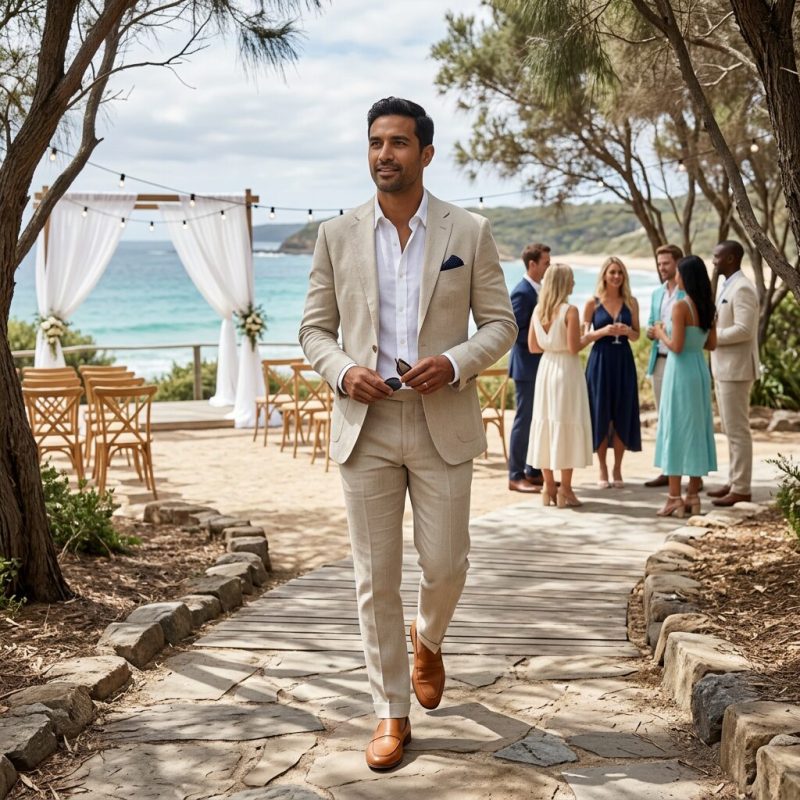
Beach wedding guest outfits for men: dress for the invitation
Nov
Images are styling illustrations, not photographs of products for sale.
A good beach wedding guest outfit starts with the invitation, not the sand. A shoreline setting does not automatically mean shorts, open-neck shirts or bare feet are acceptable. The couple’s dress code, the venue, and any operator rules always come first. Once those are clear, you can build a look that feels polished, works in the weather and still suits the setting.
For coastal weddings, the main challenge is balancing formality with comfort. Wind can move light fabric around. Sun can make dark colours feel heavy. Sand changes the way shoes behave. A good outfit plan accounts for all of that, while still looking intentional in photos and at the reception.
Start with the invitation and the setting
If the invitation says cocktail, semi-formal, resort wear or casual, treat each phrase differently. A beach location may soften the look, but it does not erase the dress code. If the wording is unclear, the safest move is to dress one step tidier than you think you need to. That usually looks better than arriving underdone.
The same is true for the venue. A ceremony on a lawn beside the beach calls for different shoes and tailoring than a barefoot ceremony on the sand. If there are multiple parts to the day, think through each one separately. The ceremony may call for a more polished outfit, while the reception may allow a small change into something more relaxed.
A simple rule for all beach wedding guests
- Check the invitation wording first.
- Use the venue as a guide, but do not assume it overrides the dress code.
- Choose breathable pieces that still look neat after sitting, walking and standing outside.
- Bring a backup plan for wind, heat or a later reception.
Casual beach wedding outfit formula
For a casual invitation, aim for relaxed but tidy. A printed or plain short-sleeve shirt can work if it is crisp, well-fitted and paired with tailored trousers or clean chinos. Avoid anything too holiday-only, such as oversized cuts, novelty prints or an obviously worn fabric.
The easiest formula is:
- Light shirt or a neat short-sleeve option
- Tailored chinos or lightweight trousers
- Clean loafers, sandals only if the invitation clearly suits them, or smart slip-on shoes
- A belt only if the trousers need one and it suits the look
If the ceremony is close to the beach, keep hems clear of the sand and choose trousers that do not drag. A tapered or straight leg usually looks sharper than a very wide cut in a breezy setting.
Cocktail and smart beach wedding outfits
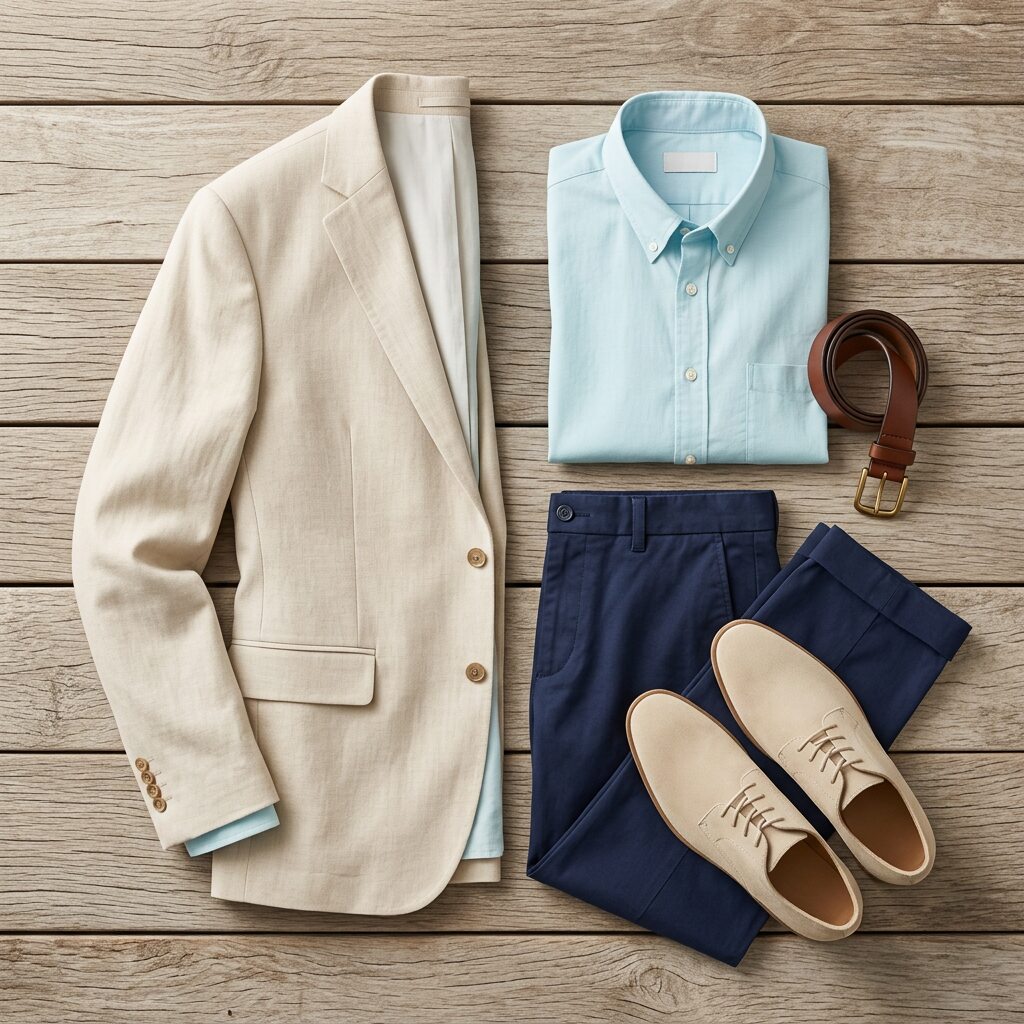
For a cocktail dress code, the outfit needs more structure. A lightweight blazer, or at least a more tailored shirt and trouser combination, helps the look read as wedding-ready rather than holiday casual. Neutral shades work well, especially when the ceremony is outdoors and the photos will be in strong light.
One practical approach is to keep the shirt simple and let the jacket or trouser line do the work. A plain shirt in a soft tone with tailored trousers is safer than trying to do too much with patterns. If you do wear print, keep the rest of the outfit quiet.
| Dress code | Good starting point | What to avoid |
|---|---|---|
| Casual | Neat shirt, chinos, smart shoes | Gym shorts, faded tees, scuffed footwear |
| Cocktail | Tailored shirt, trousers, blazer if suitable | Overly relaxed resort pieces |
| More formal | Suit separates or a suit in a lighter weight | Anything that looks like beach holiday wear |
Lightweight layers are useful because coastal wind can make a shirt feel colder than expected once the sun drops. A jacket also helps a look hold its shape in photos and during the reception.
What to wear for a more formal beach wedding
Some beach weddings are still formal, especially if the invitation says black tie optional, formal or suit. In that case, the setting changes the fabric choice more than the overall level of dress. A lighter suit in a breathable weave often makes more sense than a heavy winter option, but the outfit should still look structured.
Stick to clean tailoring. A tie may be appropriate, depending on the invitation. If the ceremony is outdoors, keep an eye on how the jacket sits in the wind. Too much looseness can make even a good suit look untidy. A jacket that fits through the shoulders and chest is more important than extra room everywhere else.
Check garment labels and measurements before buying or packing. Fit matters more than a label description on its own, especially with shirts and trousers that may sit differently across brands.
Footwear that works on sand, paths and dance floors
Shoes are often the most practical part of the outfit to plan early. Sand, timber decking, grass and paved paths all behave differently. For a beach ceremony, a shoe that is easy to walk in and stable on uneven ground is usually the best option.
- Loafers: A strong choice for cocktail and smarter casual dress codes.
- Derby shoes or dress shoes: Better for formal invitations and polished venues.
- Minimal leather or suede-look slip-ons: Can work for relaxed settings if they are neat and clean.
- Sandals: Only if the invitation, venue and outfit clearly allow them. They should still look deliberate.
If the ceremony is directly on sand, consider bringing a pair of shoes for the reception and changing after the ceremony. This can keep your outfit looking sharper later in the day and saves you from carrying sand through the rest of the event.
Fabric, colour and fit choices that make sense outdoors
Beach weddings often reward simple choices. Light colours reflect heat better than deep tones, and they usually feel more in tune with the setting. White is best avoided unless the invitation clearly says otherwise. Cream, pale blue, soft green, sand, stone and muted navy are all easier to wear without competing with the bridal party.
When looking at fabric, check the label and the way it drapes. A close weave usually holds its shape better and can feel more substantial in a breeze. A fabric that wrinkles heavily may still work, but only if you are comfortable with a more relaxed finish. For shirts, a collar gives the look a cleaner line, especially if the wedding is slightly dressier.
Choose pieces that look neat when you stand, sit and move. If they only look good in a mirror at home, they may not hold up outdoors.
Accessories that help without overdoing it
Accessories should support the outfit rather than turn it into costume. A watch, understated belt or pocket square can be enough. Sunglasses are useful between the ceremony and reception, but choose a style that suits the outfit and remember that fashion sunglasses are not a substitute for certified sun protection. For eye protection, look for lenses labelled to the relevant standard, and only wear what suits the level of light and the event.
If the day is bright, a brimmed hat may be practical before or after the ceremony, especially while moving between locations. Again, check the dress code and the couple’s preferences first. Some weddings are relaxed enough for one; others are not.
For more casual resort-inspired pieces, see the men’s resortwear collection. If you are building the outfit around a lighter shirt, the beach shirts range is a useful place to compare options. For bright conditions, the sunglasses category may help you narrow down a style for pre-ceremony and post-ceremony wear.
Packing for the day and the reception
Beach weddings often involve more moving parts than city weddings. You may be travelling from accommodation, dealing with wind, or changing later for dancing. Pack with that in mind.
- A spare shirt if the ceremony is hot or the day runs long
- Two shoe options if the ceremony surface and reception surface are different
- A lint roller or small brush for sand and stray fibres
- A compact grooming kit for after travel
- A light layer for evening wind
If you plan to change, keep the second outfit simple. A cleaner shirt, different shoes or a lighter jacket can be enough. You do not need a full wardrobe swap. The goal is to stay neat from ceremony to last dance.
A final check before you leave
Before heading out, try the full outfit on together. Walk in the shoes. Sit in the trousers. Lift your arms in the shirt or jacket. If anything pulls, creases too hard or feels unstable, adjust it before the event. A beach wedding is not the place to discover a collar that sits oddly or shoes that slip on deck boards.
In short, dress for the invitation first, then adapt for the coast. That approach keeps the outfit appropriate, comfortable and easy to wear through the whole day.
Frequently asked questions
Can men wear shorts to a beach wedding?
Only if the invitation, dress code and venue clearly support that level of casual dress. A beach setting alone does not make shorts appropriate, so check the wording first.
What shoes should men wear to a beach wedding?
Loafers, neat slip-ons or dress shoes usually work best, depending on the dress code and surface. If sand is involved, consider changing shoes for the reception.
Should I bring a second outfit for the reception?
A full second outfit is not always needed, but a spare shirt, cleaner shoes or a light layer can be useful if the ceremony is outdoors or the evening gets breezy.
