
beach wear, Style
Cotton vs linen: choosing clothes for a warm holiday
Nov
Choosing between cotton and linen for a holiday is not a matter of one fabric being good and the other bad. Look at the finished garment: its weight, weave, lining, fit and care instructions. Two shirts with the same fibre label can feel quite different, so compare the actual pieces rather than choosing by fibre name alone.
When comparing beach shirts, read each product’s stated fabric composition rather than assuming every shirt is cotton or linen.
Fibre and weave basics
Cotton is a plant-based fibre that grows in bolls. The lint is spun into yarn for woven or knitted fabrics. Cotton Australia’s information about the plant and its fibre provides useful background when you are reading a garment label.
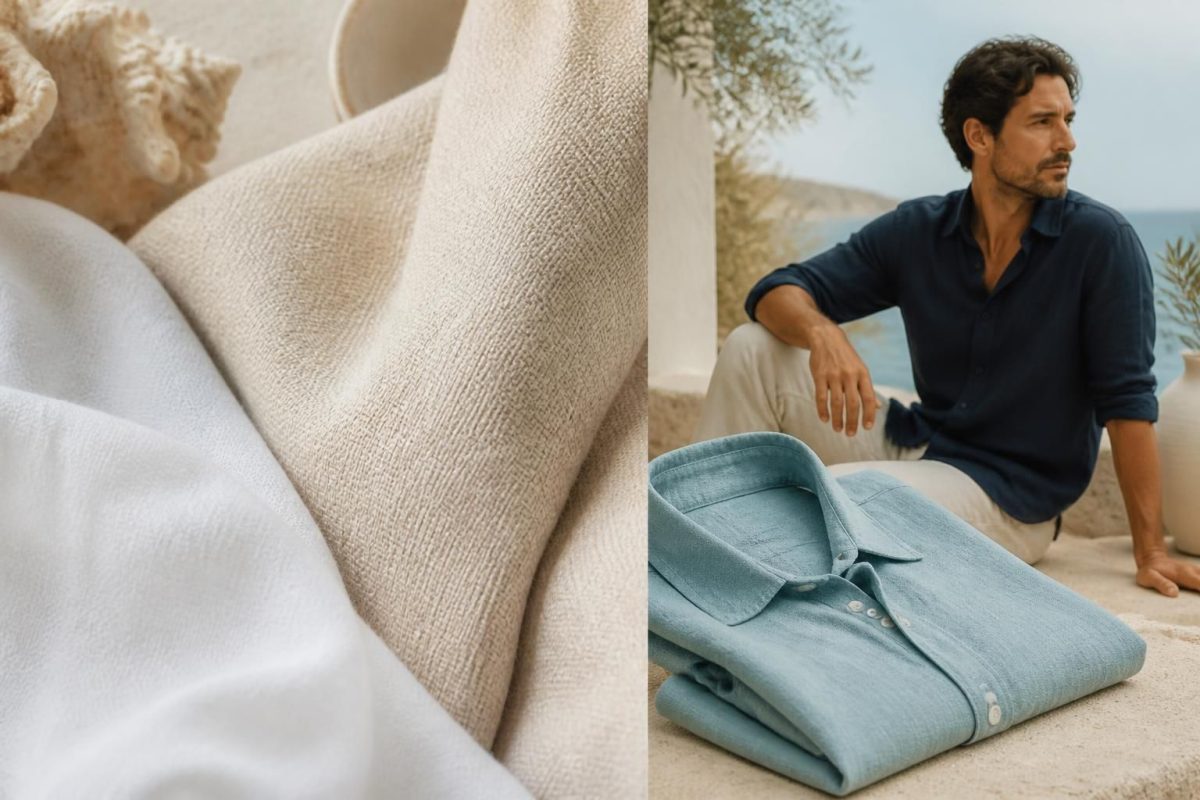
Linen is made from flax fibres. The QUT linen overview explains its properties and uses in clothing. The texture varies from fabric to fabric, so look at close-up photos or a sample rather than expecting every linen piece to have the same finish.
In practical terms, the fibre contributes texture and strength, while the weave or knit affects drape, opacity and how the fabric sits on your body. Soft cotton voile and loosely woven linen gauze can both be lightweight, but they hang and move differently.
Weight, opacity and lining
Opacity depends on weave, colour, finish and lining as well as fabric weight. A lightweight piece is not automatically see-through, and a heavier one is not automatically opaque. If photographs are unclear, ask about lining and request a close-up before ordering.
- Lightweight cottons such as muslin or gauze can be airy but may require a slip in dresses or skirts for modesty.
- Linen with a loose plain weave can also be semi-sheer at certain angles; look for garment descriptions that mention lining or a double layer at the skirt or bodice.
- Structured garments like tailored shirts and trousers are commonly made from midweight cottons or heavier linen weaves to avoid transparency.
If the product detail is unclear, request fabric close-ups and verify whether the piece includes a lining or underlayer.
Fit and drape: how they change the look
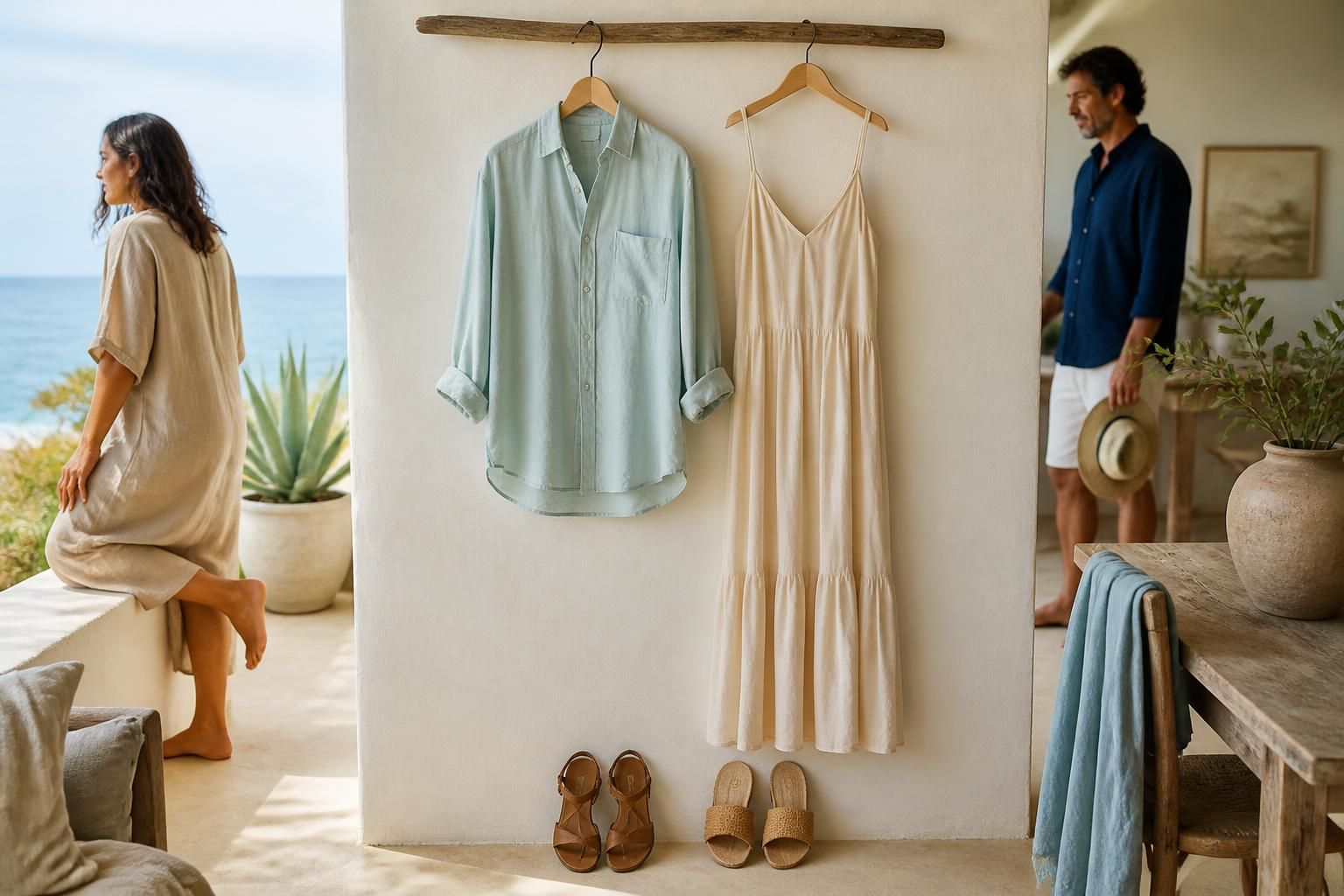
Cotton spans crisp poplins to soft brushed jerseys. Crisp cotton will keep a collar or hem defined; that is useful when you want a neat silhouette after a long day of sightseeing. Linen typically softens with wear and has more visible texture and movement, which suits relaxed silhouettes and longer pieces.
Practical outfit formulas:
- Beach-to-town: pack a midweight cotton shirt to wear over swimwear and a relaxed linen or linen-blend pant for movement and a casual finish.
- Sightseeing: a soft cotton tee layered under a loose linen shirt gives easy temperature control; take the shirt off during high-activity walks and put it back on for cafés or shops.
- Casual dinner: a linen shirt tucked into tailored cotton trousers presents a relaxed but tidy look; check whether the shirt has a lining if you want a smoother finish under bright lights.
Creasing, appearance and practical maintenance
Linen creases more readily than many cotton weaves; some people embrace that relaxed, lived-in look while others prefer less visible wrinkling. Cotton can be finished to appear smoother after washing and pressing.
- If you dislike wrinkles, choose a tighter-weave cotton or look for blended fabrics that mention reduced creasing in the description.
- If you like textured pieces, select linen described as slubbed or relaxed; those fabrics are designed to show texture and soft creases.
- If you plan to press or steam clothing on the trip, check the care label and the equipment instructions first. Choose pieces whose care you can realistically manage while away.
Labels and care: check before you buy
Care instructions affect whether a garment suits a trip where you might hand-wash or use a laundry service. The Alliance’s linen care advice provides general background, but a particular garment’s care label takes precedence, especially for blends, linings and trims.
Before purchase or packing, read the care label for wash temperature, tumble-dry advice and ironing instructions. Also check for sewn-in linings and reinforced seams if you expect heavy use. If a description lacks detail, ask the retailer for fabric weight or care photos.
Packing and mixing fibres for a warm holiday
Mix cotton and linen qualities rather than choosing one outright. A small capsule can cover beach days, walking tours and casual dinners with modest packing.
- Three tops: one structured cotton shirt, one soft cotton tee, one relaxed linen overshirt or shirt for texture.
- Two bottoms: a midweight cotton short or tailored trouser, and a relaxed linen or linen-blend pant or skirt for evening or easy movement.
- One dress plus one lightweight layer: pick a lined dress if you need opacity, or bring a slip to pair with lightweight pieces.
Compare cuts in the beach shirts collection and women’s resortwear range. Those collections are a place to browse shapes, not proof that an item contains cotton or linen. Check the actual fibre label, measurements and care details on any piece you consider.
How to choose at the counter or online
Decide by how you want garments to behave in use. If you want structure and crisp lines, lean toward midweight cotton styles. If you prefer texture, movement and a relaxed silhouette, linen is appropriate. Consider blends and lined pieces as middle options.
When in doubt, ask for close-up photos of the weave, confirm fibre content on the label, and check care instructions so you know what washing and pressing will entail on holiday.
Common questions
Will linen always crease more than cotton?
Linen fibres are more likely to show creasing because of the fibre structure, but creasing also depends on weave, weight and finishing. Some linen fabrics are finished or blended to reduce visible wrinkles, and tightly woven cottons can also crease. Check the garment details and fabric photos before buying.
Can I machine wash linen and cotton while travelling?
Many cotton and linen garments can be machine washed on gentle cycles, but care instructions vary. Linen care advice recommends delicate programs, mild detergent and avoiding excessive heat; follow the specific garment label and any manufacturer notes.
How do I avoid see-through dresses in warm fabrics?
Choose a higher fabric weight or a lined style for better opacity, or plan a slip or short underlayer. If product photos do not make opacity clear, request close-up images and confirm whether the dress has a lining or specified fabric weight.
